
Recently, however, we have witnessed a significant shift.
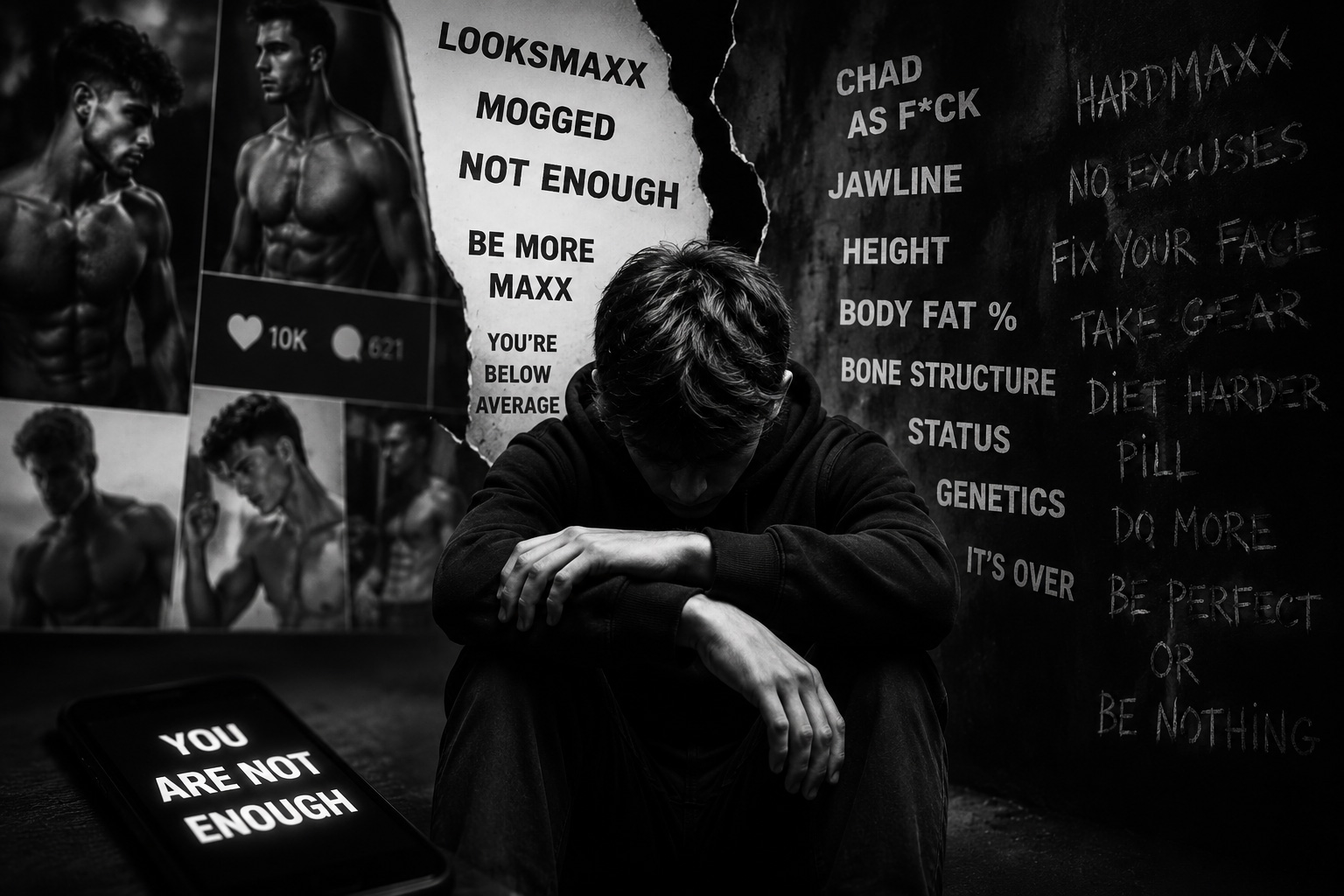
What were once typical adolescent concerns about height, weight, muscle mass, acne or hair are now being amplified by a growing online culture centred around “looksmaxxing” and “mogging”. While some adults may dismiss these terms as harmless internet slang, doing so would be a mistake. Beneath the surface lies a movement that is increasingly shaping how boys view themselves, their value and their future.
At its most basic level, looksmaxxing is the pursuit of maximising physical attractiveness. Some aspects appear positive. Exercise, healthy eating, good grooming and self-care are all important parts of personal wellbeing. This is often referred to online as “softmaxxing”.
The concern comes when boys are drawn deeper into communities promoting what is known as “hardmaxxing” extreme and often pseudoscientific methods designed to alter physical appearance. We are increasingly hearing discussions around jaw-training devices, “bone smashing” techniques designed to supposedly reshape facial structure, steroid use, dangerous dieting practices and even conversations promoting Class A drugs such as methamphetamine as a shortcut to achieving a leaner physique.
Alongside this sits the concept of “mogging” , the idea that some men are genetically superior to others and that social status is largely determined by physical appearance. Boys are encouraged to compare themselves constantly against other males, ranking attractiveness, height, facial structure and desirability.
The result is a relentless hierarchy where somebody must always be winning and somebody must always be losing.
This should concern all of us.
At its core, this culture preys on the very normal insecurities experienced during adolescence. Teenagers naturally compare themselves to others while developing their identities. Social media and influencer culture intensify this pressure by presenting edited, filtered and genetically exceptional physiques as if they are normal and achievable for everyone.
What makes this trend particularly dangerous is that it focuses heavily on factors young people have little or no control over. Height, bone structure, facial symmetry and many other traits are largely determined by genetics. Yes, healthy lifestyles, exercise and self-care can improve wellbeing and confidence, but there are limits.
When boys are repeatedly told online that their worth, attractiveness and future relationships depend on achieving an almost impossible physical standard, many begin to feel hopeless. Some start to believe that if they do not fit the promoted image, they are somehow “less than”.
Unlike some of the harmful misogynistic narratives we have challenged in recent years, this issue feels different.
Those messages often focus on behaviour, attitudes and choices. Looksmaxxing targets identity itself. It tells boys that who they are is the problem.
For boys already struggling with confidence, this can be devastating. We are seeing increasing numbers of boys becoming anxious about aspects of themselves they cannot change. Boys who believe they will never be attractive enough. Boys who become obsessed with perceived flaws. Boys who withdraw socially because they feel they do not measure up.
At its most extreme, this mindset can contribute to depression, anxiety, low self-esteem, body dysmorphia, social isolation and a growing sense of hopelessness about the future.
Through ongoing discussions with fellow practitioner Mike Nicholson from Progressive Masculinity , who also works extensively with boys and young men, a shared concern has emerged. Between us, we have heard boys openly admit that they would consider exploring harmful pursuits if they believed it would deliver quick results.
Whether that is experimenting with steroids, engaging in dangerous dieting practices, using unregulated supplements or following appearance-altering techniques promoted online, the underlying message is often the same:
“If this is what it takes to become attractive, accepted or successful, then it may be worth the risk.”
That should be a wake-up call for all of us.
What concerns me most is that while many professionals working with boys have rightly focused significant attention on issues such as misogyny, healthy relationships and online harms, conversations around body image, looksmaxxing and appearance-based self-worth I fear maybe receiving far less attention.
Yet these issues are becoming increasingly prevalent in the lives of boys.
If we are not discussing them, somebody else is.
And increasingly, that somebody else is an influencer, an anonymous online forum or an algorithm designed to keep boys engaged by amplifying their insecurities.
For professionals working with boys in schools, youth organisations and sports settings, this is a subject that requires attention. We must educate ourselves about the language, narratives and communities surrounding looksmaxxing and mogging. More importantly, we must be willing to engage boys on their level, using language they understand and creating spaces where these conversations can happen openly and without judgement.
My fear is that in many settings these discussions are not happening at all.
If that is the case, there is a real risk that boys will fall through the gaps.
While adults focus on one set of concerns, boys may be quietly struggling with another. They may be carrying anxieties about their appearance, their attractiveness, their future relationships and their perceived value without any trusted adult recognising the pressure they are under.
If we genuinely want to support boys, we must widen the conversation. We cannot only talk about what boys should think and how boys should behave. We must also talk about how boys feel about themselves.
Because when a young person begins to believe that they are fundamentally not enough, the consequences can be far more damaging than any online trend.
Written by: Richard Pomfrett – Boyz-2-Men